

AR028 - 'ARCHEO 10 YEAR ANNIVERSARY' VOL. 1 EP + 29x29 Insert:
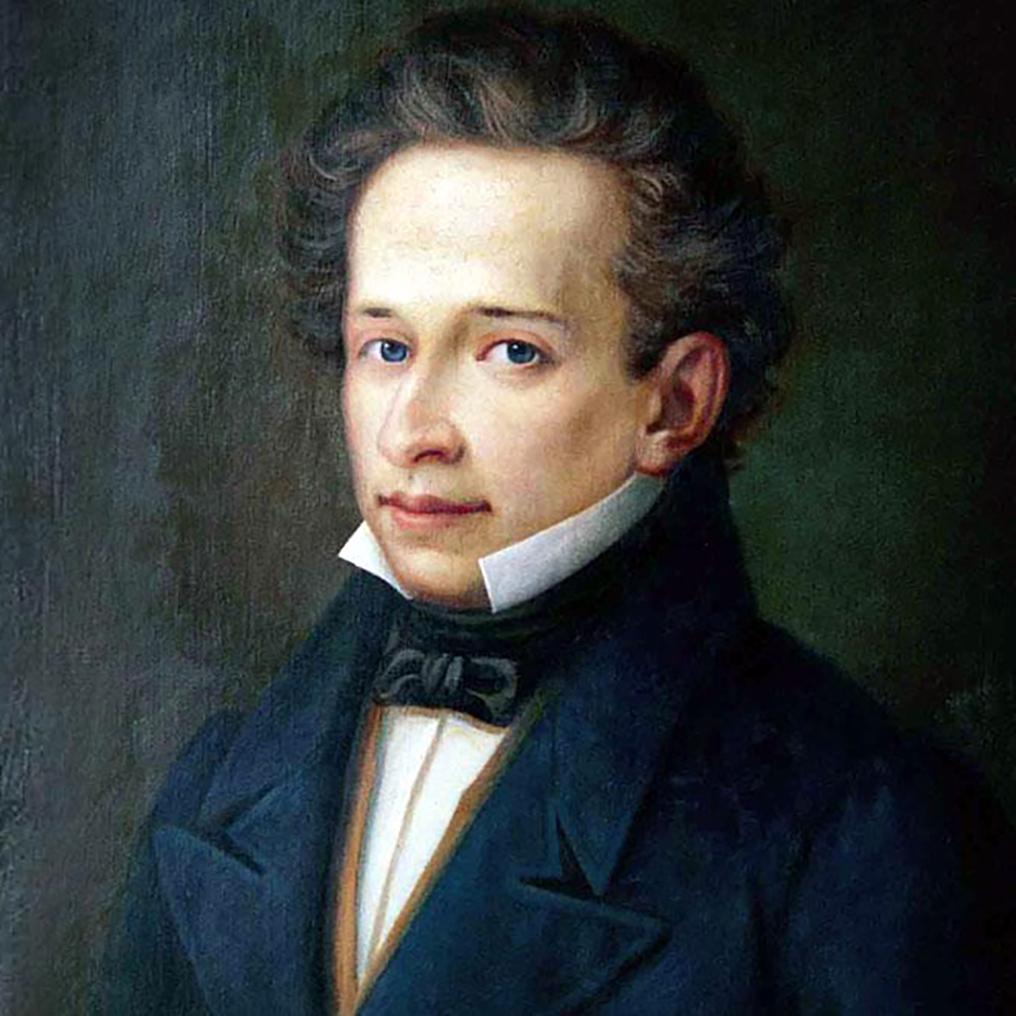
GIACOMO LEOPARDI - L'INFINITO (1825):
Giacomo Leopardi (1798-1837) was an Italian poet, philosopher, writer and philologist.
He is considered among the major Italian poets of the XIXth century and one of the most important figures in world literature, as well as one of the main exponents of literary Romanticism.
L'Infinito (1825):
Sempre caro mi fu quest'ermo colle,
e questa siepe, che da tanta parte
dell'ultimo orizzonte il guardo esclude.
Ma sedendo e mirando, interminati
spazi di là da quella, e sovrumani
silenzi, e profondissima quiete
io nel pensier mi fingo, ove per poco
il cor non si spaura. E come il vento
odo stormir tra queste piante, io quello
infinito silenzio a questa voce
vo comparando: e mi sovvien l'eterno,
e le morte stagioni, e la presente
e viva, e il suon di lei. Così tra questa
immensità s'annega il pensier mio:
e il naufragar m'è dolce in questo mare.
The Infinite (1825):
This lonely hill has always been dear to me
and this hedge, which covers my sight
a good part of the more distant horizon.
But as I sit and watch,
I imagine in my mind endless spaces beyond the hedge,
and superhuman silences
and very deep quiet, so much so that for a short while
my soul is not afraid. And as soon as I hear
the wind rustling among the fronds of these plants, I compare
that infinite silence to this rustling:
and the eternal comes to mind,
the eras already past, and the present one and
still alive, and its sound. So my thoughts
sinks into this immensity:
and being shipwrecked in this sea is sweet to me.
Giacomo Leopardi explores the idea of time and space within the natural world, and the peace that comes with an appreciation of the immensity of eternity.
The Infinite is one of the most famous lyrics of Leopardi's Canti, which the poet wrote in the years of his early youth in Recanati, his hometown, in the Marche region.
Leopardi's idyll is a composition characterized by a strong lyrical intimacy: in it the element of the natural landscape (often devoid of the connotations of the ideal ancient landscape) is closely linked to the expression of man's states of mind. This expression of one's self is not intended to be an escape into the irrational or into dreams (as happens in Romantic lyric poetry), but only an opportunity for a broad reflection on time, history and the sad destiny of men. Furthermore, the skilful and wise mix of linguistic registers that range from the literary one ("Ermo colle") to the simple, plain and colloquial one ("Sempre caro") is striking. This idyll is divided into two very distinct parts: in the first the poet expresses concepts familiar to him while, in the second, he uses his imagination and gets lost in the infinite.
The poet obtains significant effects of estrangement, playing with the emphasis that the key words of the poem, all pertaining to the semantic sphere of the philosophical infinite.
The Infinite has an extremely simple turn of phrase, it's also precisely the frequent repetition of the conjunction "e" (and) that gives the idyll the sensation of indefinite and infinite that the poet wanted to convey.
The entire poem is centered on terms pertaining to the semantic sphere of indefiniteness: the poetic construction of a new type of mysticism derives from it, based on man's identification with the absoluteness of the order of a universe regulated by an inexorable necessity in itself indifferent to the destinies of the individual.
Starting from the first words "Sempre caro mi fu" (= It was always dear to me) it is then possible to understand the dialectic between finite and infinite characteristic of the work. The term "Sempre" (= Always) connotes a feeling of indefinite, interminable, vague, whereas "fu" (= was) is the time of the punctual past, of an irreversible action that has already occurred, which is configured with the finite; the subject ("caro mi") intervenes as mediator, who with his imagination is able to transcend contingency to the point of identifying with the "mare" (= sea) of the infinite.
On the border between morphology and lexicon, the use of the demonstrative pronouns "questo" (= this) or "quello" (= that), with their local connotations, underlines a path of identification, defined according to the degrees of an ascending climax, which from the spatial confines of the ego ("quest'ermo colle e questa siepe", "queste piante" = this remote hill and this hedge, these plants) leads the poet to merge with the absolute ("questa immensità", "questo mare" = this immensity, this sea) in a process of indimentation, which ultimately suggests the presence, in the poet, of a practical theism anchored to a pantheistic vision of reality: this mysticism makes Leopardi the only Italian poet who has truly been able to express the interior dimension of the Sehnsucht (nostalgic yearning for the absolute) typical of European Romanticism.